The course
7 phases, 71 lessons, in the order you take them.
Each piece of equipment is taught before a lesson needs it. Every lesson ends with the oral questions that go with it.
Phase 0
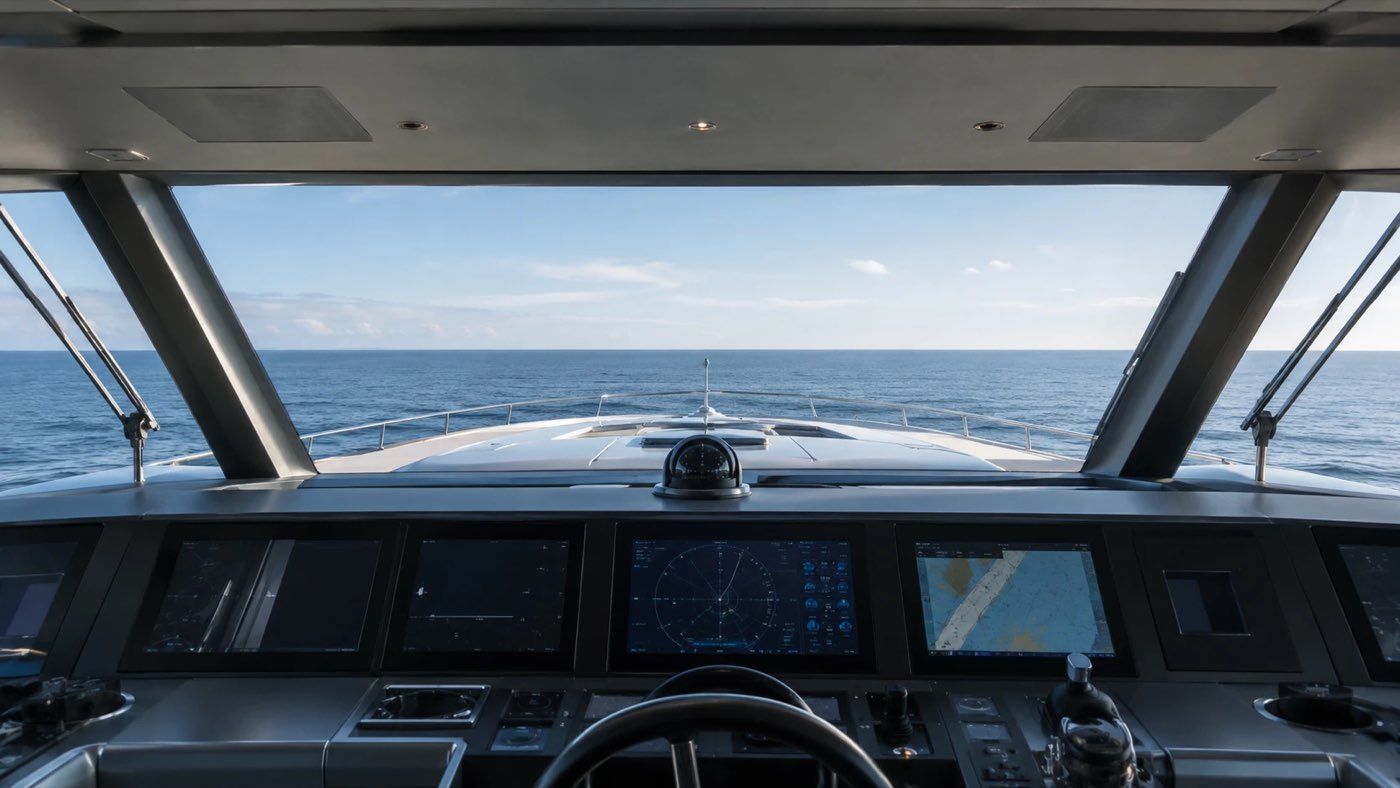
Using the simulator
The views, moving round the bridge, the ECDIS tabs, the lesson panel and the clock.
Using the simulator: views, stations, the ECDIS tabs and the clock
Find your way round the simulator before the course starts: the bridge view and its stations, the radar, the ECDIS tabs, and time compression.
Phase 1
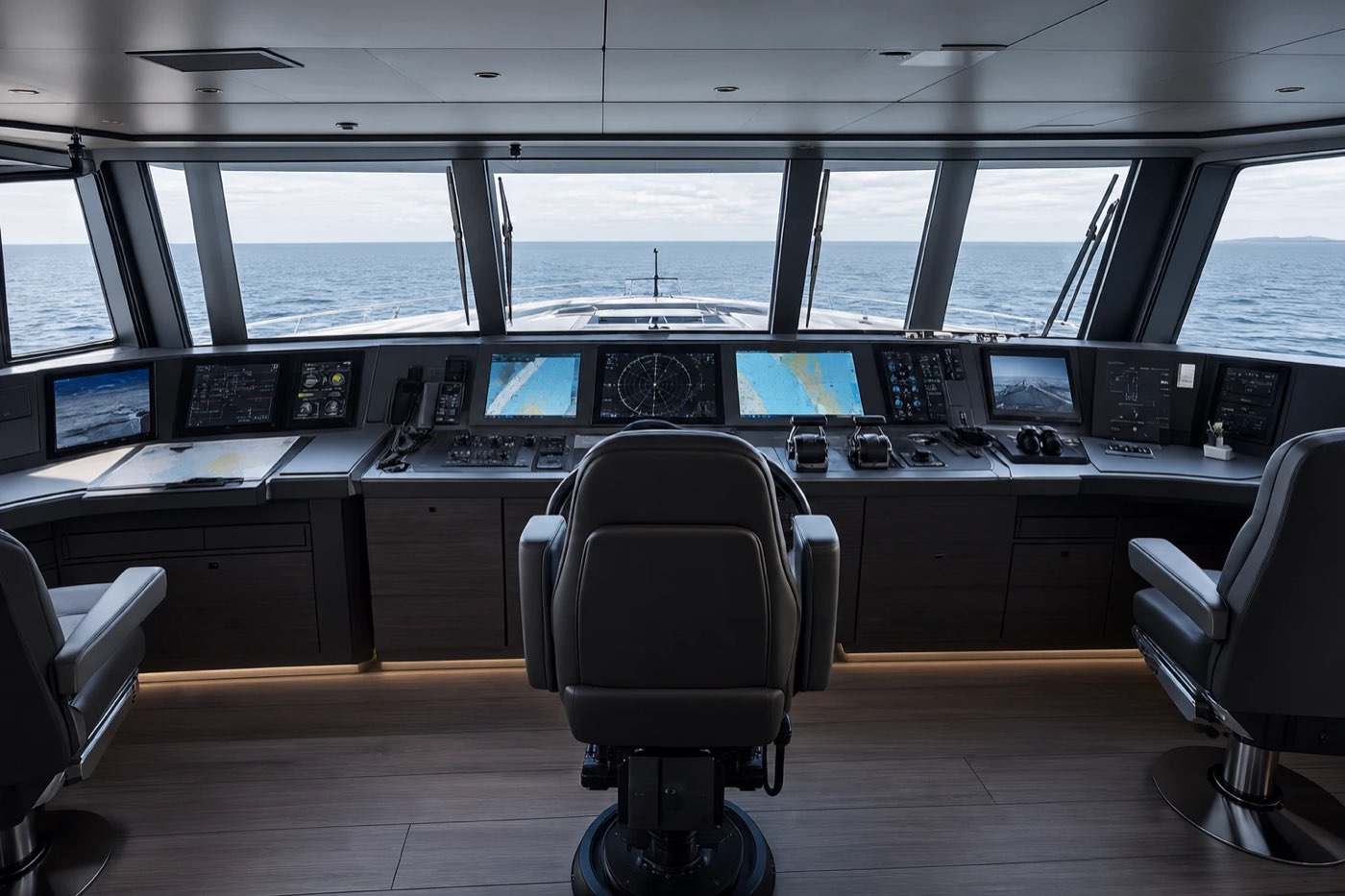
The bridge, one piece of equipment at a time
Every piece of bridge equipment the later lessons use, each taught on its own before it is needed.
The bridge controls: steering, engines, whistle, VHF, alerts, deck log and VDR
Use the controls every later lesson relies on: hand steering and autopilot, the telegraph, the whistle, the VHF, the central alert panel, the deck log and the VDR.
4 oral questions
Steering gear test before departure
Test each pump, each control system, local control and the alarms, then leave it ready for sea.
4 oral questions
The compasses: gyros, repeaters and the magnetic compass
Find the heading changeover and the magnetic compass, line up a wing repeater, take a bearing, and change over when a gyro fails.
4 oral questions
Sunset: navigation lights and the evening routine
The right lights on by sunset and nothing else, a sidelight lamp changed over, and the weather in the deck log.
4 oral questions
BNWAS test
Test every stage, every reset device and the emergency call, find the faulty reset, and leave the BNWAS as the master set it.
4 oral questions
Radar: setting up from cold
Both radars from cold: scanner check, gain, tune, clutter, monitor, heading line and display modes.
12 oral questions
Radar: target discrimination
Two pairs of yachts: see them merge on the long pulse and the wider S-band beam, and separate on the short pulse and the X-band.
4 oral questions
Radar blind and shadow sectors: find them and record them
Survey both radars in the sea clutter, measure each sector with the EBL, record it, and report the survey.
4 oral questions
Radar: a SART and a racon
Find a liferaft's SART and a charted racon, take their bearing and range, and report.
4 oral questions
Echo sounder and speed log
Find the wrong draught in the echo sounder, set the datum and alarm, and use water and bottom track correctly.
4 oral questions
ECDIS: safety settings and alarms
Work out and set the safety depth and contour, the display and the look-ahead, and see the anti-grounding alarm work.
5 oral questions
ECDIS: route planning and the route check
Check a route left unchecked, re-plan it along the channel, set XTD and turn radii, check again and monitor it.
3 oral questions
AIS voyage data on getting under way
Bring the AIS voyage data up to date before sailing: status, draught, destination, ETA in UTC and persons on board.
4 oral questions
NAVTEX, EGC and maritime safety information
Set up the NAVTEX, read and plot a navigational warning, wait out a garbled gale warning, read EGC, and test the EPIRB.
4 oral questions
Distress: DSC alert and MAYDAY
A designated DSC distress alert with a good position, the MAYDAY on channel 16, the acknowledgement read and the log.
4 oral questions
False distress alert: stop it and cancel it
Reset a mistaken DSC alert before it repeats, cancel it by voice on channel 16, close the cover and log it.
3 oral questions
Fire alarm in the guest cabins
Accept the alarm and send someone to look before acting: no general alarm for a false alarm, then reset and tell the Master.
4 oral questions
Phase 2
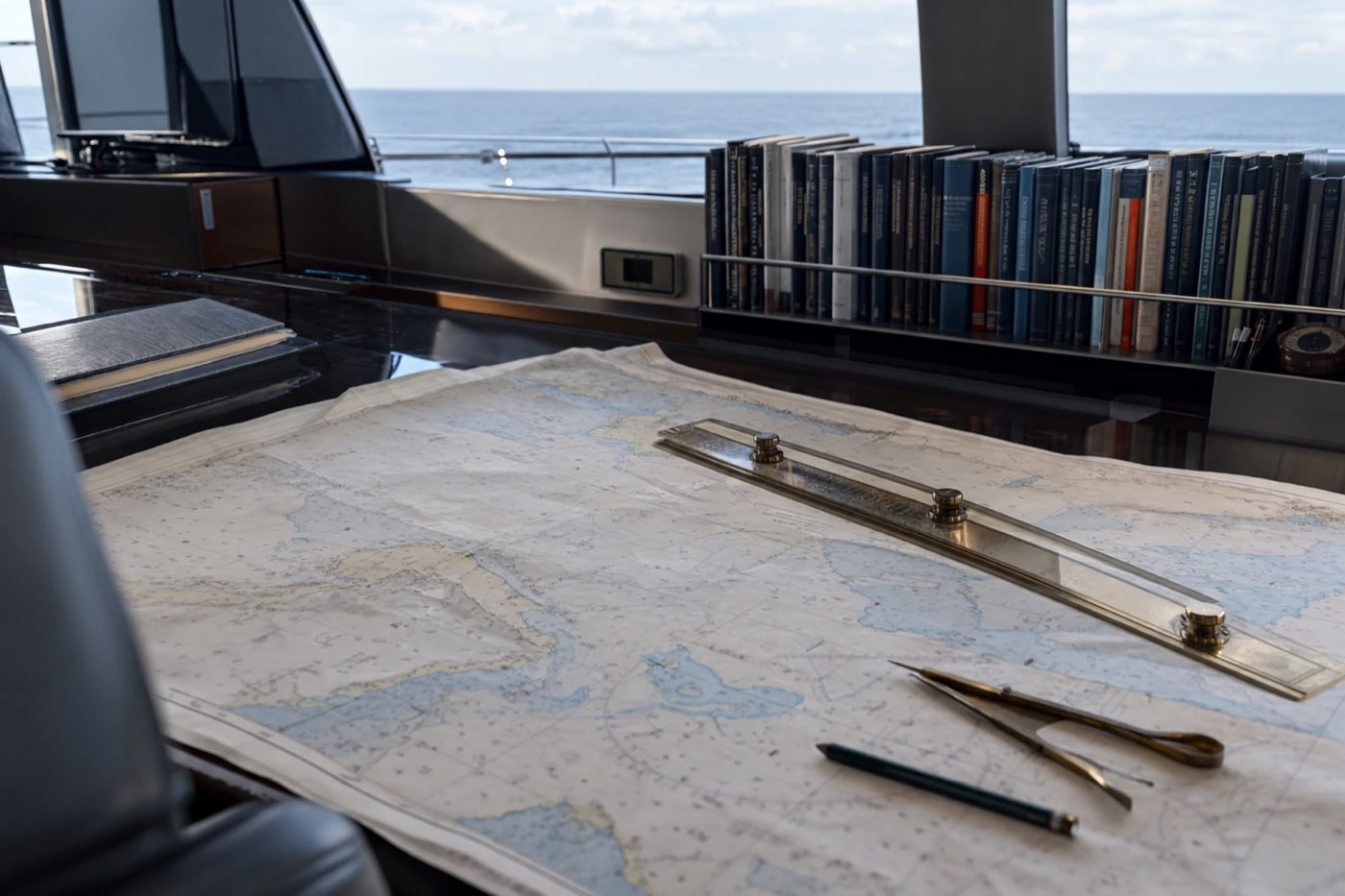
Publications and the chart table
The paper chart and its tools, the notices and the books, tides and signals.
The chart table: the right chart, a position, a course and a DR
Take out the right paper chart, plot the GNSS position, lay off the course, run a DR ahead and check it against the position when the time comes.
4 oral questions
This week's notices: charts and publications
Work the whole weekly edition: correct the charts in ink or pencil, then the List of lights, the radio list and the pilot book, and record each.
4 oral questions
Chart corrections from notices to mariners
Apply this week's notices to the paper charts, ink or pencil as each needs, and log every one.
4 oral questions
ENC updates and permits
Read the ENC holdings, load the new permits, apply the updates and make a chart status report before sailing.
3 oral questions
Tidal calculations: UK standard and secondary ports
Work a Plymouth height, then a secondary port height and time, by the Admiralty method on the practice tables.
4 oral questions
Tides at a diurnal port
One tide a day: work a height at Hon Dau and at a secondary port on the practice tables, with the twelve-hour curve.
3 oral questions
A tidal window over a shoal patch
Work the height of tide the crossing needs and when it comes, a secondary port height by the factor curve, then cross with enough water.
3 oral questions
The tidal stream atlas, and an EP
Find the atlas page for the coming hour, scale the rate for today, and lay an EP an hour ahead on the paper chart.
3 oral questions
Signals: flags and distress signals
Fly the diver flag, read the hoists and signals the lookout reports, and work the action card for a distress.
4 oral questions
IALA Region B: into the Ambrose Channel at dusk
Identify the safe water buoy, take her through the entrance gate and up the Ambrose Channel with every red buoy to starboard.
4 oral questions
IALA Region A: a practice channel and a preferred channel mark
Take her up a made-up Region A channel with every red buoy to port, then pass a preferred channel mark on the right side.
3 oral questions
Phase 3
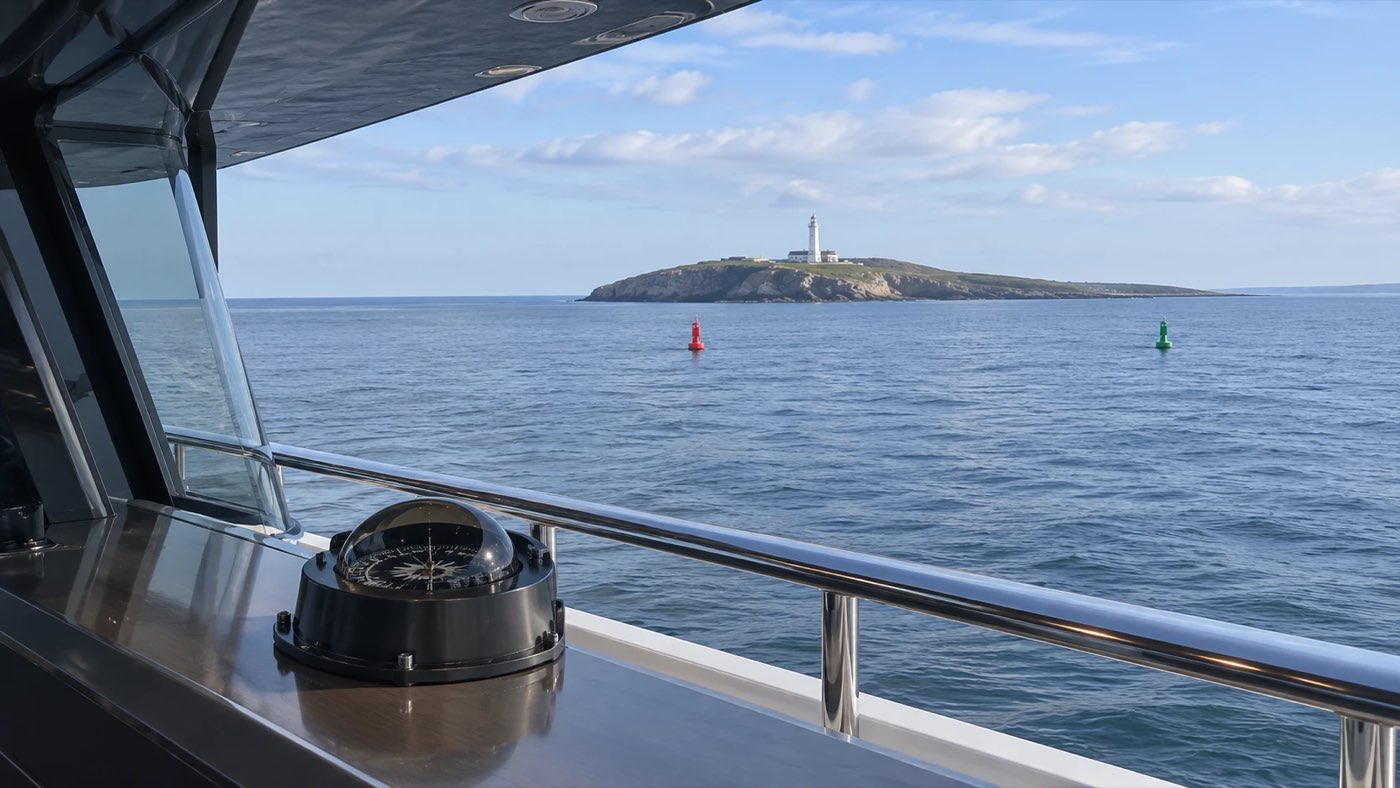
Fixing the position
Visual, radar and celestial fixes, compass errors, clearing lines, parallel indexing and GNSS errors.
GNSS lost: fix by visual bearings
Both GNSS fail in the approach: acknowledge, take three quick bearings from the wing and fix the ship in the ECDIS.
4 oral questions
Compass error by azimuth and amplitude
Find the gyro error from the sun, check the standard compass against it, log the comparison, and take an amplitude at sunset.
4 oral questions
Compass error by a transit: the Sandy Hook range at dusk
Identify a pair of range lights, take a gyro bearing as they come in line, find the gyro error from the charted bearing, then check the standard compass.
4 oral questions
Identifying lights at night, and fixing on them
Time each light, find it in the List of Lights by its characteristic and position, then fix on three.
4 oral questions
A clearing bearing past a wreck
Clear a dangerous wreck on a bearing of a charted light, check it as you pass, and find the set and drift of the stream.
4 oral questions
Vertical and horizontal sextant angles
Distance off a lighthouse by vertical sextant angle, and a station pointer fix from two horizontal angles.
3 oral questions
A day's work by the sun: sun-run-sun
Index error, a morning sun sight worked and plotted, the noon latitude, and the morning line run up to a noon fix.
4 oral questions
Fixing by radar ranges, and a running fix
Both GNSS fail: fix by radar ranges of charted marks on the ECDIS, then a running fix, and log it.
4 oral questions
Leeway in a running fix
A near gale on the beam: find the leeway, take two bearings ten minutes apart, and run the first on along the water track.
3 oral questions
A light rising and dipping: Sandy Hook on a clear night
Work out a rising range, watch the light rise from the monkey island, see it dip from the bridge wing, and fix her by the rising range and a bearing.
4 oral questions
Parallel indexing on the radar
Set a PI line on the coast, spot the set towards the land on the radar, regain the track and allow for it.
3 oral questions
GNSS errors and spoofing
Spot a GNSS receiver walking away from the truth, cross-check, change the primary, and report it.
4 oral questions
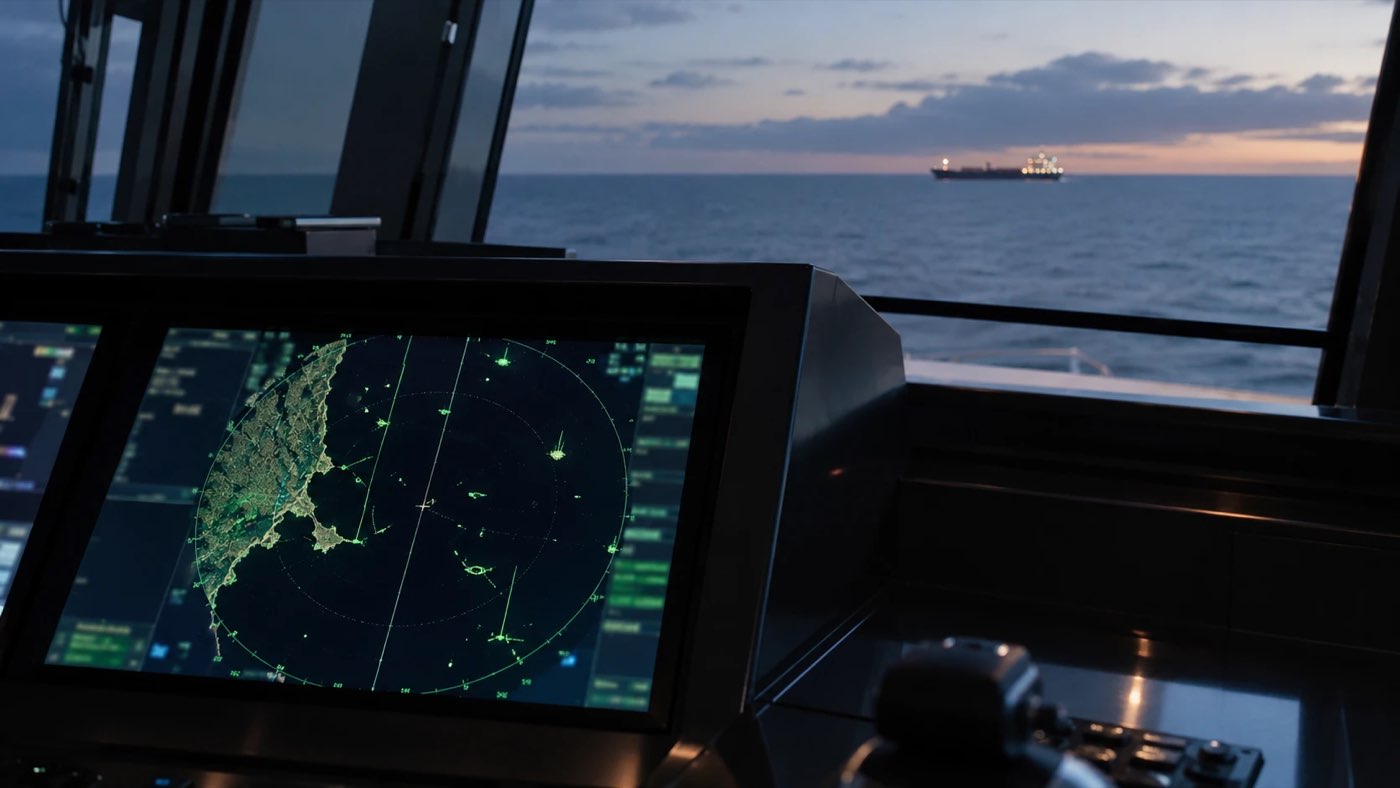
Phase 4
Collision avoidance
Plotting by hand, then ARPA, stabilisation and trial manoeuvres, the rules in practice, AIS, and fog.
Radar plotting: the relative motion triangle
Plot a crossing ship by hand from three observations, find her CPA, course, speed and aspect, and the effect of our alteration.
5 oral questions
ARPA: acquire, assess and act
Acquire a crossing ship, read the CPA, alter boldly to starboard and check the action works.
5 oral questions
ARPA: automatic acquisition and the acquisition zone
Set an acquisition zone, let ARPA pick up a closing ship by itself, and deal with the warning.
3 oral questions
Radar stabilisation: sea or ground, true motion, and a speed log error
See what ground and sea stabilisation do to true vectors in a tide, set true motion, and catch a log reading low.
4 oral questions
ARPA trial manoeuvre: try it, make it, check it
In fog, plot a crossing ship, find a safe alteration with the ARPA trial, make it, and check it worked.
4 oral questions
COLREGs in sight: a give-way ship that does not, then head-on
Stand on for a ship crossing from port, give the doubt signal, act without turning to port; then alter to starboard for a ship head-on.
5 oral questions
AIS for situational awareness, and what it does not show
Set the AIS overlay and activation range, read a Class B target, find a boat with no AIS on the radar, and cross-check AIS with ARPA.
4 oral questions
Restricted visibility: when the fog comes in
Fog signal, lights, hand steering, a safe speed, radar plotting and the deck log, all within minutes of the fog.
5 oral questions
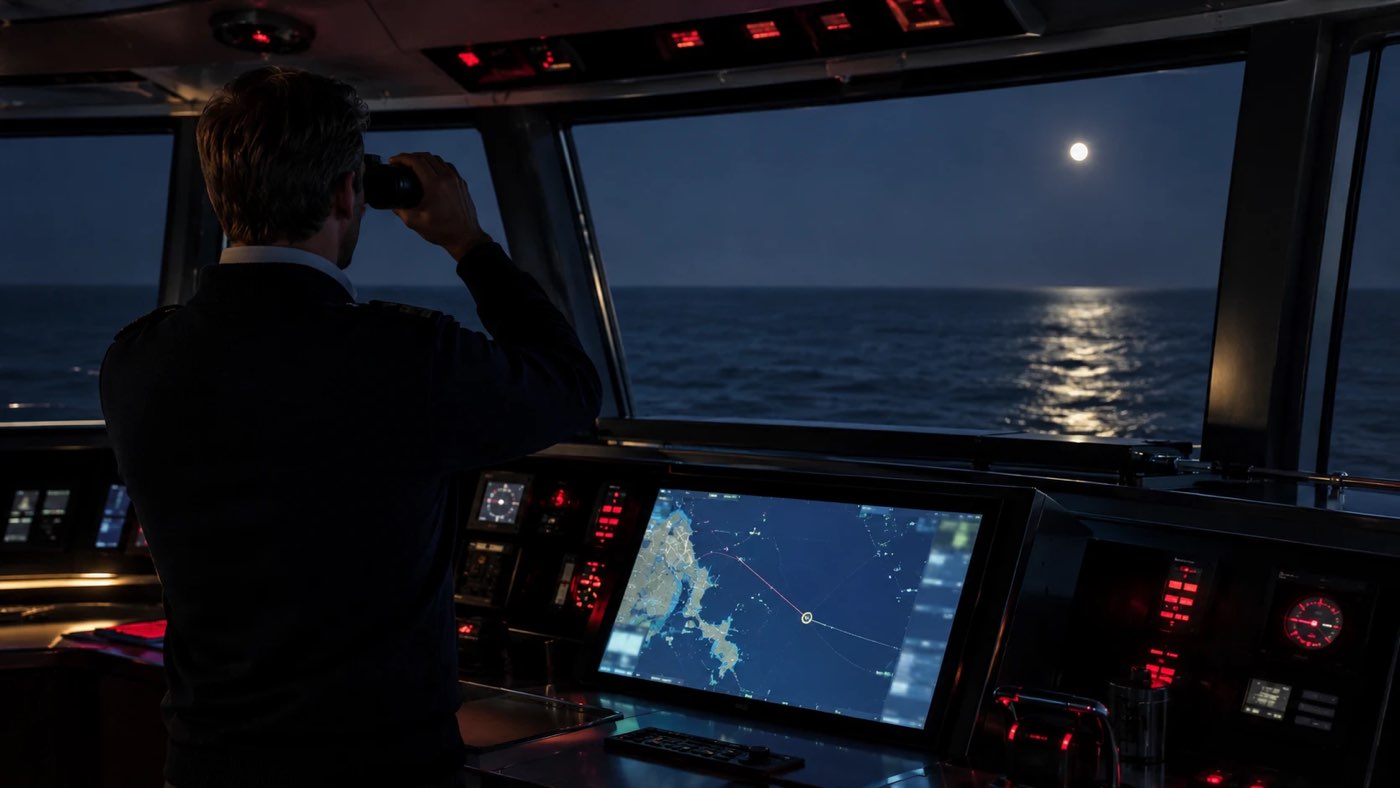
Phase 5
Passage planning and keeping the watch
Planning and checking a passage, paper chart navigation, VTS, the weather, the handover and the night watch.
Plan the passage in from sea
Make and check the route on the ECDIS, work depths, clearance, reporting points and contingencies from the publications, and hand the plan to the master.
4 oral questions
Bridge checks before departure
An hour before sailing: put the bridge right, from steering pumps to the course recorder, and tick the departure checklist.
3 oral questions
Coastal passage on paper after both ECDIS fail
Get the position onto the paper chart, fix every 15 minutes, lay off an EP and a course to steer for the stream.
5 oral questions
Reporting to the VTS inbound
Find the reporting points and the channel in the pilot book and radio list, and report at each point from inside its circle.
4 oral questions
Weather watch: a depression passing
Spot the falling glass, read the gale warning, find the low by Buys Ballot, read the charts, judge fog risk and prepare for heavy weather.
5 oral questions
Taking over the night watch
Read and sign the orders, work the taking-over checklist honestly, then call the master and work the fog checklist when visibility drops.
4 oral questions
Bridge team challenges: speaking up to the pilot
The pilot orders a course that takes her out of the channel. Check it, speak up, and escalate until it is put right.
3 oral questions
Night watch: night vision, both radars, ECDIS take-over
Set the bridge up for the night, keep both radars running, take over on the back-up ECDIS when the main one fails, and keep clear.
5 oral questions
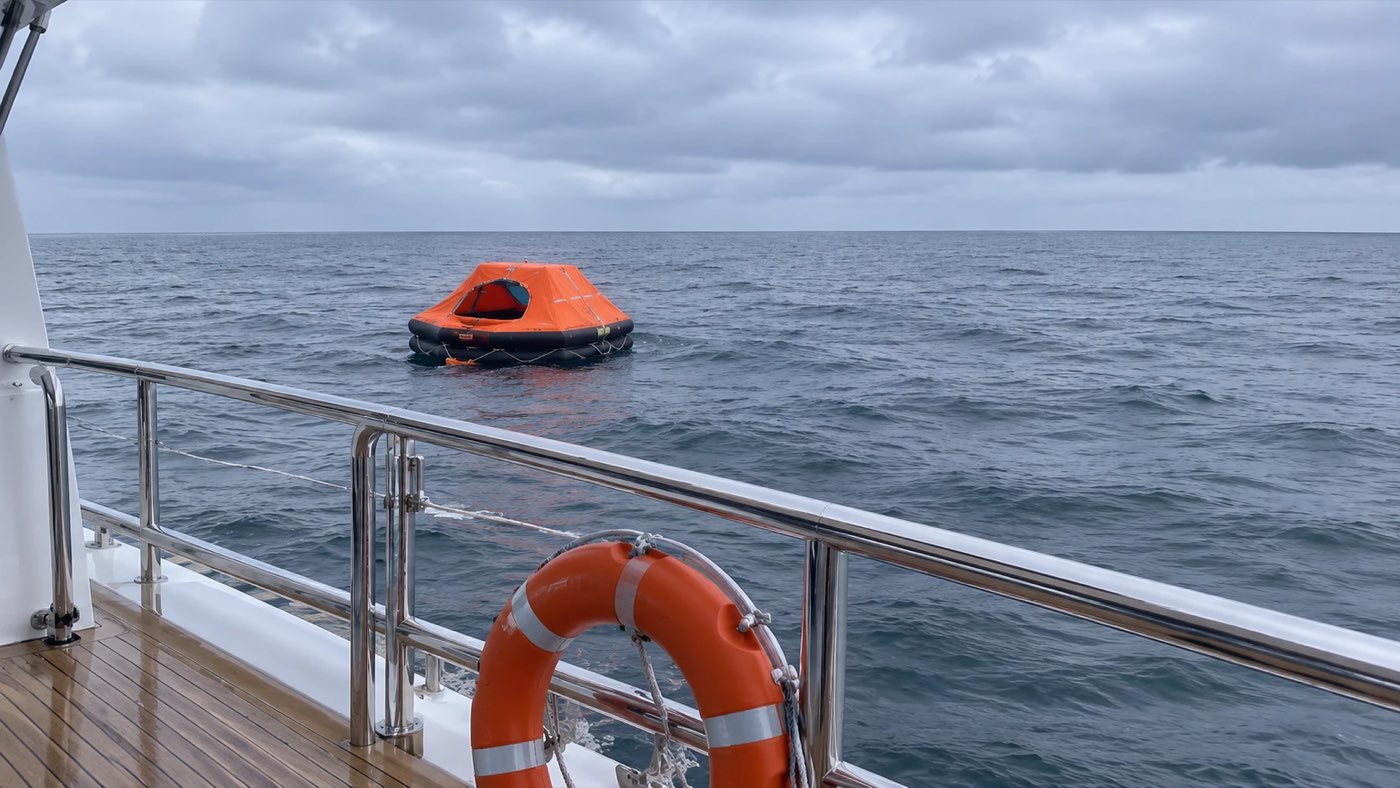
Phase 6
Emergencies and ship handling
Steering failure, fire, man overboard, grounding and pollution, distress at sea, anchoring and berthing.
Emergency steering drill
Bridge steering fails at sea: answer the alarm, start the second pump, steer from the steering gear room, then hand back.
4 oral questions
Fire in the tender garage
Accept the alarm, send someone, call the Master, then raise the alarm, shut the zone down, start the pump and put the wind right.
5 oral questions
Man overboard
Mark, throw, turn and alarm; a Williamson turn back down the track, then a slow approach upwind and engines stopped.
4 oral questions
Aground: stop, assess the damage, signal and report
She touches bottom at night on a falling tide: stop the engines, alarm and doors, the master, aground lights, tank and hull soundings, the tide, a PAN PAN, the VDR and the log.
4 oral questions
Oil spill on deck: the SOPEP, containing it and reporting it
A fuel vent overflows on deck: stop the transfer, raise the alarm, plug the scuppers and lay absorbents, report to the coastal state and the company, and record it.
4 oral questions
Distress alert received: the coast station does not answer
Read the alert, listen on 16, hold off the DSC, acknowledge by voice, tell the coast station, and find the liferaft.
4 oral questions
Search and rescue: an expanding square for a liferaft
Plan an expanding square from the datum as an ECDIS route, sail it, find the liferaft by eye, close it slowly and report it.
4 oral questions
Anchoring and the anchor watch
Slow approach, stop, gentle sternway, let go and pay out; then the anchor position, the watch circle, and what to do when she drags.
4 oral questions
Helm orders to a helmsman
Put a helmsman on a course, give rudder orders, hear them repeated and reported, steady her and bring her back.
4 oral questions
Squat and under keel clearance
Run over shallow water at speed, see the clearance under the keel shrink, and slow her down to get it back.
3 oral questions
Interaction: a big ship overtaking in a channel
A container ship overtakes close in the Ambrose Channel. Open the gap before she draws level, let her pass and come back to the channel course.
3 oral questions
Berthing from the wing
Take control at the port wing, come in slowly, land softly on the fenders and lie alongside the pontoon.
4 oral questions
Embarking a pilot
Call the pilot station, make a lee at the speed asked for, rig the ladder on the right side at the right height, and hold her until the pilot is aboard.
3 oral questions
Preparing for the pilot and the master-pilot exchange
Make the bridge ready for the pilot, fill in the pilot card, then hand it over, check his plan against ours and agree the con.
3 oral questions